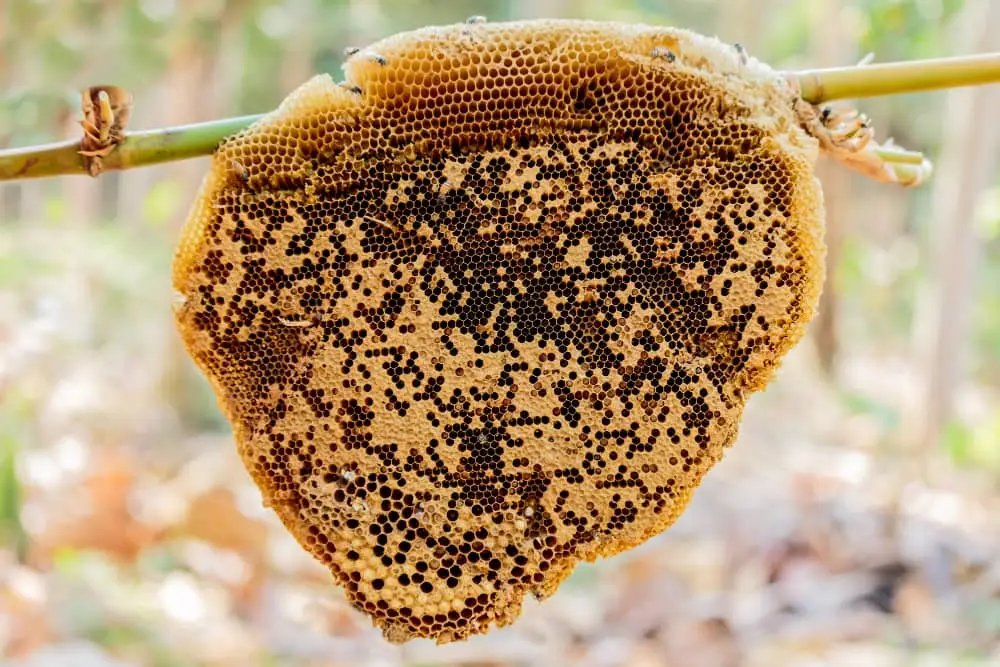
Paper wasp nests
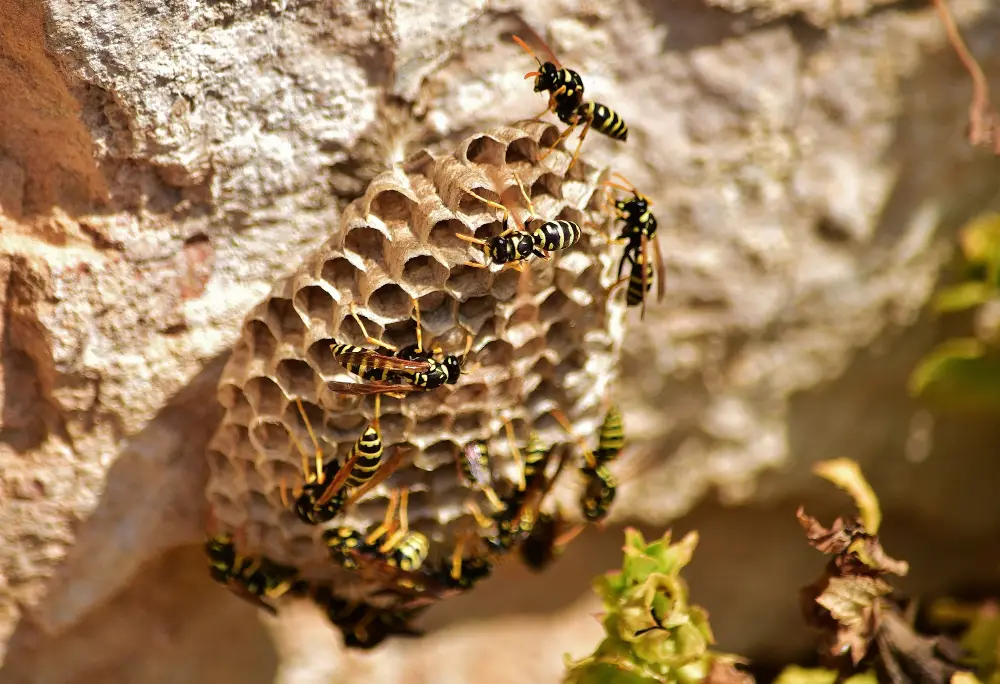
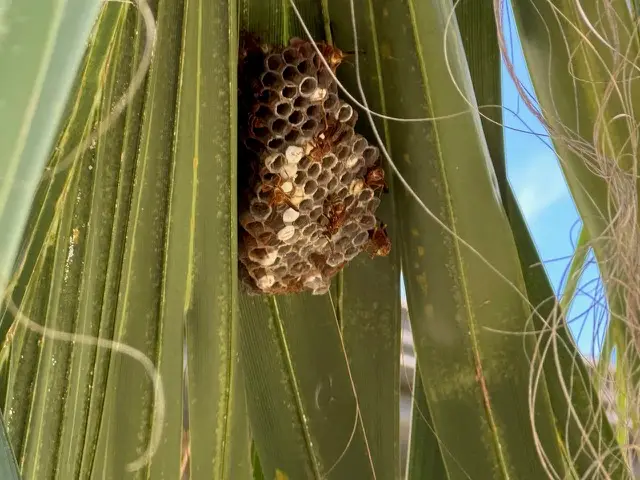
Paper wasps hang open grey combs under eaves, fences and playsets. We remove the comb intact, then clean the surface.
Wasp control
Raul The Bees Guy removes paper wasp, mud dauber, yellow jacket and ground wasp nests from structures across Greater Houston. Every job starts with a free inspection and a written price.
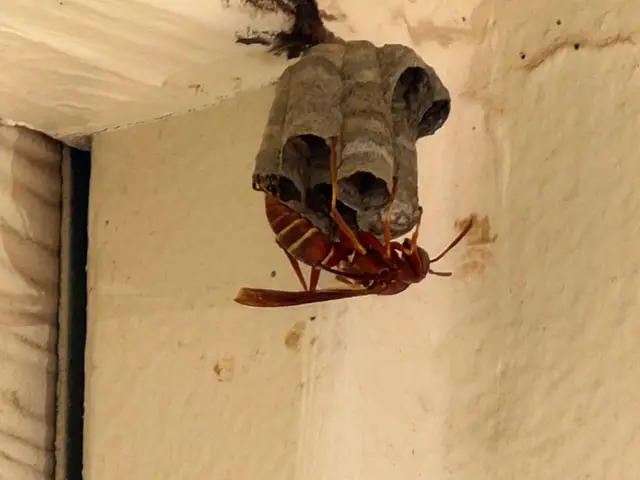
Wasp nest removal extracts an active nest and treats the site so the colony cannot rebuild. The job takes 30 to 90 minutes. Every job starts with a free on-site inspection, and the price follows from it.
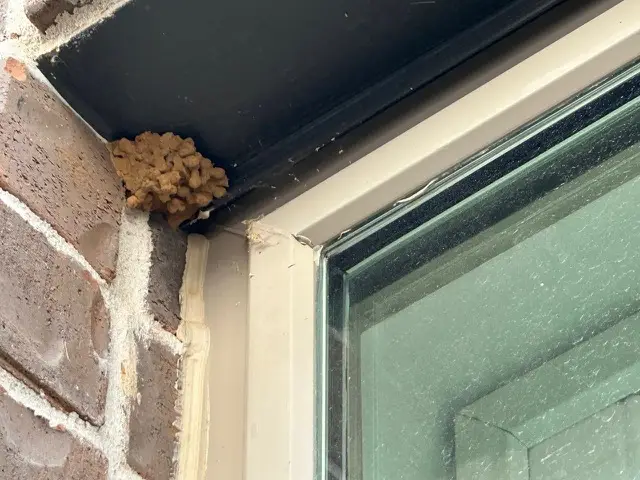
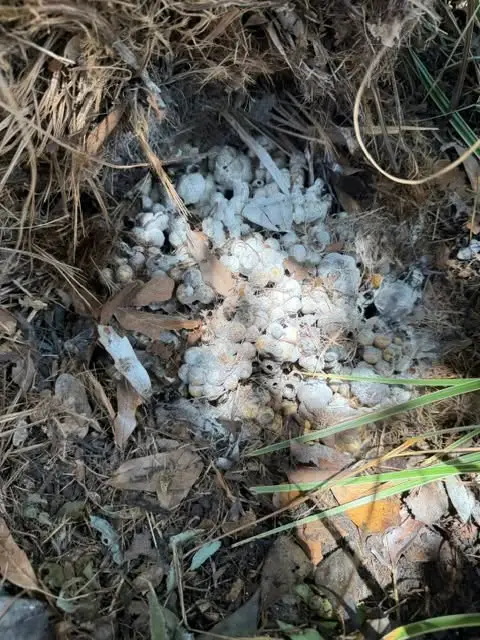
Nest material identifies the species. Paper wasps build open grey combs under eaves. Mud daubers build mud tubes on walls. Yellow jackets conceal nests underground or inside cavities. Each species needs a different removal method.
Texas holds four wasp groups that nest on residential property. Paper wasps build an exposed, umbrella-shaped comb under eaves, fences and playsets. Mud daubers build cylindrical mud tubes on sheltered vertical surfaces and rarely sting. Yellow jackets conceal a papery nest inside a wall void or an abandoned rodent burrow. Hornets build a large enclosed grey nest in trees and outbuildings.
Species identification changes the price, the protective equipment and the treatment. We identify the species during the free inspection, before we quote.
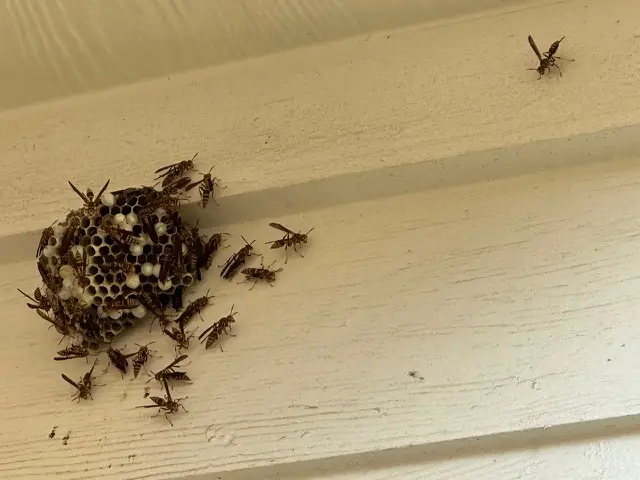
Remove a wasp nest once it sits within 20 feet of a door, walkway or play area. Removal also becomes urgent when the colony enters a wall cavity, or when anyone on the property carries a sting allergy.
Five conditions turn a wasp nest from a nuisance into a removal job:
A paper wasp colony grows from one queen in March to 200 workers by August. Removal in spring costs less and carries less sting risk than removal in late summer.
The price of wasp nest removal depends on four factors: the species, the nest location, the colony size and same-day attendance. The inspection costs nothing and the price is agreed before work starts.
Three variables move the price:
The exact price comes from the free inspection and goes in writing before any work begins.
Professional wasp nest removal runs in four stages. A technician identifies the species, protects the site, treats and physically removes the nest, then cleans the surface and seals the entry point.
We locate the nest, identify the species and check for secondary nests. This stage sets the method and the price. It costs nothing.
We move people and pets out of the flight path, close nearby windows and vents, and put on a ventilated suit. Wasps sting repeatedly, so the protective stage is not optional.
We treat the colony, then physically remove the comb or mud structure. Spraying alone leaves the nest in place, and a nest left in place attracts the next colony.
We clean the surface to remove pheromone residue, then seal the entry point. Pheromone residue is the single most common reason a treated site gets reoccupied.
Most jobs finish in 30 to 90 minutes. A nest inside a wall cavity takes longer because the structure has to be opened and closed again.
We remove six nest types — paper wasp combs, mud dauber tubes, yellow jacket nests, ground colonies, hornet nests, and nests built inside walls, soffits and attics.
Paper wasps hang open grey combs under eaves, fences and playsets. We remove the comb intact, then clean the surface.
Mud daubers build cylindrical tubes on walls, ceilings and light fittings. We remove them without damaging paint or siding.
Yellow jackets conceal colonies in wall voids, soffits and rodent burrows. We locate the nest first, then treat and extract it.
Ground wasps colonise lawns, flowerbeds and retaining walls. We treat the entrance, then excavate the nest.
Hornets build large enclosed nests in trees, barns and outbuildings. We remove the nest whole where the location allows.
Colonies settle in attics, wall cavities and crawlspaces. We open the structure, clear the nest, then close it back up.
A store-bought spray leaves the nest in place. It kills the wasps it touches, then the comb and the pheromone trail survive. Professional removal extracts the nest, cleans the site and seals the entry point.
A wasp retains its sting and uses it repeatedly, unlike a honey bee. A disturbed yellow jacket colony sends workers out in numbers.
The comb and the pheromone trail survive a surface spray. Both signal to the next queen that the site works.
Blocking a visible entry hole drives the colony deeper into the structure. That turns a simple removal into a structural one.
DIY wasp injuries come from falling more often than from stings. Roofline nests need proper fall protection.
Our removals carry a guarantee. We return at no charge when a colony reoccupies the treated site inside that period.
Questions
The price of wasp nest removal depends on four factors:
The inspection is free and the price is agreed in writing before any work starts.
DIY removal fails on two counts. A store-bought spray reaches only the wasps on the surface, and leaves the comb, brood and pheromone trail in place. Wasps also sting repeatedly, and a disturbed colony defends itself in numbers.
Most DIY wasp injuries come from ladder falls rather than stings. We remove roofline nests with fall protection.
Most wasp nest removals take 30 to 90 minutes. A nest inside a wall cavity, soffit or attic takes two to four hours, because the structure has to be opened, cleared and closed back up.
Yes. We apply targeted, low-toxicity products directly to the nest rather than broadcasting them across the property. Keep children and pets indoors during the treatment and for two hours afterwards.
We offer same-day attendance when the schedule allows, and we run 24/7. Demand peaks between March and August, so call early in the day during those months. Tell us if anyone on the property has a sting allergy and we prioritise the visit.
Yes. We work across roughly a 100-mile radius from Katy. That covers Houston, Fort Bend County, Montgomery County, Brazoria County and the Bay Area. Check the service area list for your city.
More services
Raul The Bees Guy offers 6 other bee and wasp services, from wasp nest removal to bee prevention.
Honey bee colonies build comb inside walls, attics and soffits. We relocate the bees to a beekeeper and rebuild the structure afterwards.
Learn moreYellow jackets conceal nests underground and inside wall voids. We locate the colony first, then treat and extract it.
Learn moreMud daubers cement tubes to walls, eaves and light fittings. We remove the tubes and treat the surface so they do not rebuild.
Learn moreCarpenter bees bore into untreated timber and return to the same boards each year. We treat the tunnels, then seal and protect the wood.
Learn moreBumble bees pollinate crops and gardens across Texas. We relocate the colony wherever the nest location allows it.
Learn moreA full structural treatment that removes visible nests, treats soffits, fascia lines and hidden cavities, and reduces activity from day one.
Learn moreFree estimate
Send us a photo of the nest and its location. We identify the species and quote a range before we travel. The figure is confirmed in writing after the free on-site inspection.
We cover Katy, Houston and roughly 100 miles around them, 24 hours a day.
Book a free inspection
Enter your city or ZIP code, and we open the booking form with it filled in.
Call (832) 306-6846 for same-day help.